Design Thinking Training Course
Overview:
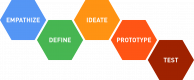
The Design Thinking (DT) process consists of five stages: empathize, define the problem, ideate, prototype, and test.
In an increasingly complex world, we face problems that require specialized approaches. Design Thinking offers a method to address these challenges effectively. By mastering design thinking, individuals can enhance their ability to tackle complex issues, communicate more clearly, persuade efficiently, improve business outcomes, and boost both organizational and personal performance.
- How DT works: learn from people and the problem at hand, identify patterns, create a model (accounting for model drift), test the model, evaluate it, and re-engineer as needed.
- The relationship between Design Thinking, innovation, and entrepreneurship.
- DT methods and tools: persona development, stakeholder mapping, customer journey mapping, service blueprint creation, and business model innovation.
- Application of DT: fostering a design mindset, driving disruptive innovation, adopting an iterative approach, utilizing agile estimation techniques, enhancing critical thinking and problem-solving skills, promoting teamwork and leadership readiness, improving communication skills, staying technologically savvy, thinking forward, developing intercultural and ethical competencies, building emotional intelligence, increasing self-awareness, honing negotiating skills, and resolving conflicts effectively.
Objectives:
- To understand the core principles and subtle aspects of Design Thinking
- To explore key concepts, factors, theories, types, and models in DT
- To engage in hands-on experimentation and practice with DT
Delivery:
This is a one-day (4-hour) training course that includes:
- lectures (40% - presentation of theories, concepts, models, and interactive sessions),
- group exercises (30% - group dynamics, games, discussions, and mock conflict resolution activities),
- individual activities (15% - writing, designing, and peer discussions)
- and other elements (15% - videos and reading materials).
Note: due to the nature of this course, a minimum group size of 3 is required.
This course is available as onsite live training in Norway or online live training.Course Outline
Session 1: Introduction to Design Thinking (60mins)
Session 2: Key concepts, theories, types and models in DT (60mins)
Session 3: Apply DT in daily work (60 mins)
Session 4: Impact (60 mins)
Requirements
There are no specific requirements needed to attend this course.
Open Training Courses require 5+ participants.
Design Thinking Training Course - Booking
Design Thinking Training Course - Enquiry
Design Thinking - Consultancy Enquiry
Upcoming Courses
Related Courses
Creative Problem Solving with Gamification Techniques (Design Thinking)
14 HoursThis instructor-led, live training in Norway (online or onsite) is aimed at beginner-level to intermediate-level participants who wish to solve everyday workplace challenges through gamification techniques.
By the end of this training, participants will be able to:
- Understand the principles of Design Thinking and its application to problem-solving.
- Incorporate gamification techniques to foster engagement and innovation.
- Develop creative and practical solutions to common workplace issues.
- Collaborate effectively across teams to implement problem-solving strategies.
- Apply iterative approaches to refine solutions through feedback and experimentation.
Design Thinking: Empathize with Internal Clients
7 HoursDesign Thinking is a human-centered approach for solving problems through empathy, definition, ideation, prototyping, and testing. This particular course places significant emphasis on the Empathize stage, focusing on linking previously identified pain points to the genuine needs of internal clients. It employs dynamic, collaborative activities to transform insights into actionable outcomes.
This instructor-led, live training (available online or onsite) is designed for beginner to intermediate teams and leaders who aim to enhance their empathy skills, build stronger relationships with internal clients, and convert pain points into meaningful opportunities for improvement.
By the end of this training, participants will be able to:
- Utilize empathy-based techniques to uncover and validate client needs.
- Translate identified pain points into clear, actionable requirements.
- Participate in dynamic role plays and simulations to practice client-centered conversations.
- Collaboratively redefine problem statements from the client’s perspective.
Format of the Course
- Interactive lectures and guided discussions.
- Dynamic, hands-on role plays and empathy exercises.
- Group workshops for collaborative problem reframing.
Course Customization Options
- To request a customized version tailored to a specific internal process (such as procurement or equipment provisioning), please contact us to arrange.
Design Thinking: Empathize & Define for Internal Clients
7 HoursDesign Thinking is a human-centered methodology for solving problems through empathy, definition, ideation, prototyping, and testing. By focusing on the initial stages of Empathize and Define, teams can gain a deeper understanding of internal clients and identify the right challenges to address.
This instructor-led, live training (online or onsite) is designed for beginner to intermediate teams and leaders who want to enhance their connection with internal clients, reduce resistance to change, and improve operational efficiency through practical, collaborative methods.
By the end of this training, participants will be able to:
- Utilize active listening and interviewing techniques to gather valuable insights about internal clients.
- Create empathy maps to capture user needs and pain points effectively.
- Distinguish between real root problems and perceived issues using tools like the 5 Whys and problem trees.
- Formulate clear, actionable problem statements (POVs) that guide solution development.
Format of the Course
- Interactive lectures and discussions.
- Practical, hands-on exercises and role-plays.
- Group workshops with plenary feedback sessions.
Course Customization Options
- To request a customized version tailored to a specific internal process (e.g., procurement or equipment provisioning), please contact us to arrange.
Design Thinking Workshop for Software Developers
14 HoursIn this instructor-led, live workshop training in Norway (online or onsite), participants will learn how to apply the five stages of Design Thinking to better understand the problems experienced by end-users of a product or service, then develop the best approach for resolving them.
By the end of this training, participants will be able to:
- Use creative strategies to match customers' needs with technologically feasible solutions.
- Formulate a strategy to increase customer value and enhance product and service offerings.
Design Thinking: Innovation Methodologies
24 HoursThis instructor-led, live training in Norway (online or onsite) is aimed at beginner-level to intermediate-level professionals who wish to understand and apply Design Thinking methodologies to drive innovation and improve business solutions.
By the end of this training, participants will be able to:
- Understand the core principles of Design Thinking and its role in innovation.
- Apply the five phases of Design Thinking to problem-solving.
- Utilize ideation techniques and tools to foster creativity.
- Implement Design Thinking strategies to improve processes and enhance efficiency.
Innovative Leadership through Design Thinking
14 HoursThis instructor-led, live training in Norway (online or onsite) is aimed at beginner-level leaders and HR professionals who wish to learn and apply Design Thinking methodologies to foster innovation, enhance problem-solving capabilities, and engage teams effectively.
By the end of this training, participants will be able to:
- Equip participants with tools and methodologies to foster innovation and team engagement.
- Develop skills in empathy mapping, ideation, and prototyping for solving complex challenges.
- Apply Design Thinking principles to leadership and HR scenarios.
- Promote a culture of innovation within tech teams.